Instantprint accelerates factory automation with £260,000 MoviĜo Robotics investment

– 1 min read


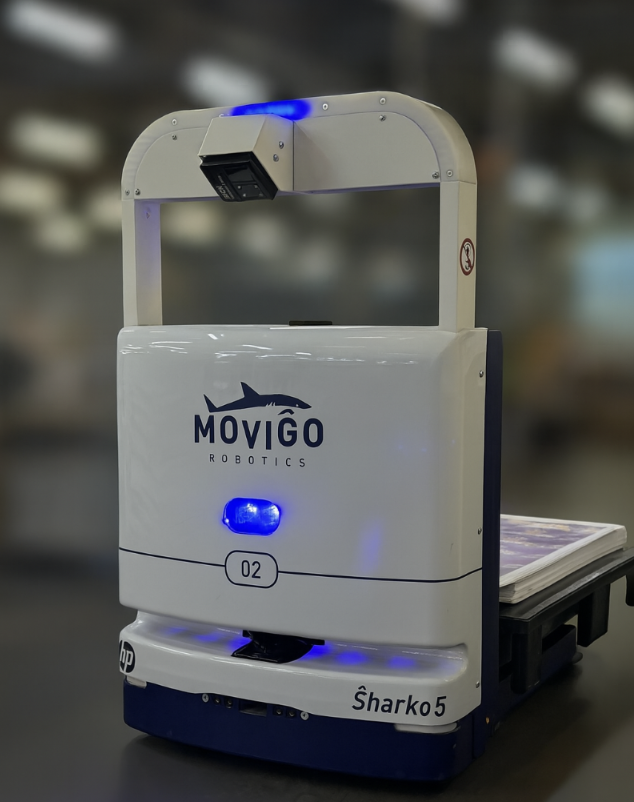
Instantprint has unveiled a major £260,000 investment in factory automation with the rollout of three advanced autonomous mobile robots (AMRs) from MoviĜo Robotics, forming a new robotic fleet designed to eliminate repetitive low-value tasks and improve production flow across its facility.
The fleet includes two Ŝharko5 and one Ŝharko10 units, capable of navigating live print environments with camera-activated task logic, QR scanning and full reflector-based navigation. Each robot automatically registers pick-up points, wraps and transports bins, manages returns, and monitors pallet stock - eliminating the need for manual pallet truck handling and letting operators focus on value-adding production work.
Smarter Moves. Faster Turnarounds. Zero Time Wasted.
Using high-resolution 3D cameras and intelligent logic, the robots proactively detect when areas need collecting, including if bins are full, pallets need replenishing, or zones become idle. When overflow areas fill up, the system automatically redistributes loads to clear space and maintain consistent flow. All pallets have been upgraded to long-lasting plastic models to increase durability and sustainability.
Piloted initially on business card production, the system now runs across key production areas and is set to double in size over the coming months. The move follows a multi-month internal reorganisation to optimise space, flow and operability.
“This investment in MoviĜo AMRs removes the repetitive bottlenecks that slow teams down,” said Jon Constantine-Smith, Head of instantprint. “It frees our operators to focus on the skilled parts of production, speeding up output, reducing wait times, and ultimately delivering an even faster turnaround for our customers.”
Designed for Productivity. Built for Scale.
The new AMR system is part of a wider investment roadmap targeting high-traffic, low-value areas of the factory floor. It forms one of instantprint’s largest automation projects of the year, supported by cross-functional teams including engineering, development, operations and production supervisors.
As with all instantprint infrastructure, the system supports sustainable manufacturing goals. The move to plastic pallets extends lifecycle usage, reduces breakage, and supports the business’s commitment to carbon net-zero operations by 2035.